
A Step by Step Guide: Mastering Local SEO for UK High Street Retailers in 2025:
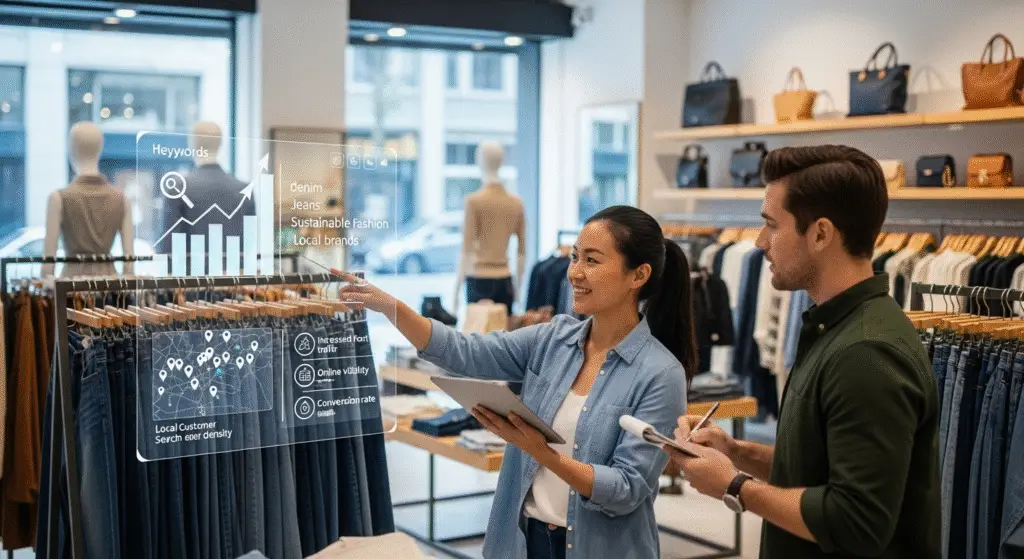
The beloved British high street has faced its share of challenges. From the rise of giant online retailers to changing shopping habits, independent shops have had to be more adaptable than ever. But here’s a crucial truth: while shoppers love the convenience of browse online, their hearts – and their wallets – are often still very much on the high street. The key is making sure they can find you.
In 2025, the digital world is inextricably linked to physical shopping. Consider this: a staggering 98% of UK shoppers now conduct some form of online research before they even think about stepping into a shop. They might be looking for product availability, checking reviews, or simply finding out your opening hours. This isn’t just a trend; it’s the standard way people shop.
For small high street retailers, this digital shift isn’t a threat to be feared, but an opportunity to be seized. It’s about ensuring your charming boutique, bustling bakery, or unique gift shop shows up exactly when a potential customer nearby is searching for what you offer. This is where Local SEO – or Local Search Engine Optimisation – becomes your secret weapon.
Why Local SEO is Your High Street Superpower
In a retail landscape where consumer confidence can be cautious and costs are rising, every advantage counts. In 2025, UK retailers are navigating headwinds like a halved real GDP growth forecast, persistent inflation, and increased labour costs from National Insurance contributions and minimum wage rises. Footfall on high streets was down by 2.2% last December, and store closures continue to outpace new openings.4
Against this backdrop, Local SEO isn’t just a “nice-to-have”; it’s a fundamental pillar for survival and growth. Here’s why it gives your business a powerful stance against larger competitors:
- You’re Where the Action Is: When someone searches for “shoe shop near me” or “independent bookshop London,” they’re not just Browse; they have high buying intent. Over 46% of all Google searches have a local intention, and searches for “near me today/tonight” have increased by more than 900%.5 You want to be the first business they see.
- Driving Real Footfall: The ultimate goal for any high street shop is to get people through the door. Local SEO directly impacts this. Statistics show that 76% of mobile users who search for something nearby visit a local business within 24 hours. Another report states that 88% of consumers doing a local search on mobile visit or call a business within 24 hours.6 This means digital visibility translates quickly into physical visits.
- Building Trust and Credibility: Your online reputation matters. 93% of consumers say online reviews affect their buying decisions.7 A strong local online presence, supported by positive reviews, builds trust before a customer even steps inside.
- Levelling the Playing Field: Large online retailers have massive marketing budgets. As a small, independent shop, you can’t compete dollar-for-dollar. But with smart Local SEO, you can dominate your local search results, often appearing above national chains for specific local queries. This allows you to punch above your weight.
- Cost-Effective Marketing: Unlike expensive paid advertising, many Local SEO tactics are free or very low cost, offering an excellent return on your time and effort.
To give your local business an even stronger edge, consider platforms designed specifically for the high street. For instance, www.ourhighstreets.co.uk offers a valuable solution for businesses to promote their store, events, properties, and even job opportunities. By utilising such dedicated local platforms, alongside your other SEO efforts, you can significantly enhance your online presence.
Now, let’s dive into the practical steps to master Local SEO for your UK high street retail business in 2025, moving beyond just the basics.
The Foundation: Beyond Basic Google Business Profile (Formerly Google My Business)
Your Google Business Profile (GBP) is the cornerstone of your local online presence. It’s the free listing that appears in Google Maps and the “Local Pack” (the box with map pins and reviews at the top of local search results). While you might have a basic listing, truly mastering it goes much further.
1. Claim and Verify Your Profile (If You Haven’t Already)
First things first, make sure you’ve claimed and verified your GBP. You can do this by searching for your business on Google Maps or Google Search. If it appears, click “Own this business?” or “Manage now.” Follow the verification steps, which often involve receiving a postcard with a code, a phone call, or an email. This proves to Google that you are the legitimate owner.
2. Optimise Your Profile with Pinpoint Accuracy and Detail
This is where many businesses stop, but it’s just the beginning.
- Name, Address, Phone (NAP) Consistency: This is critical. Your business name, address, and phone number must be identical across your GBP, your website, and any other online directories. Even small differences (e.g., “Road” vs. “Rd”) can confuse Google. Double-check everything.
- Choose the Right Categories: Select the most specific categories that describe your business. If you’re a “Toy Shop,” don’t just put “Retailer.” You can pick a primary category and up to nine additional categories. This helps Google understand exactly what you offer.
- Compelling Business Description: Write a clear, concise (up to 750 characters), and engaging description of your business. Naturally weave in keywords that local customers might use to find you, such as “independent bookshop,” “handmade gifts,” “coffee and cakes,” or “boutique clothing in [Your Town/City].” Avoid stuffing keywords or including web addresses here.
- High-Quality Photos and Videos: Visuals are hugely important. Upload high-resolution photos of your shop’s exterior (making it easy to find!), interior, popular products, and your team. Show off the atmosphere and what makes your shop unique. You can also add short videos (up to 30 seconds). Businesses with photos receive significantly more requests for directions and website clicks.
- Accurate Opening Hours: Keep your regular and special holiday hours meticulously updated. There’s nothing more frustrating for a customer than turning up to a closed shop.
- List Your Products and Services: Use the “Products” and “Services” sections to showcase what you sell or offer. This helps your GBP appear for more specific searches and provides customers with valuable information upfront.
- Utilise Google Posts: Think of Google Posts as mini-blog entries directly on your GBP. Use them to share news, special offers, upcoming events, new product arrivals, or seasonal promotions. These appear prominently and expire, encouraging customers to check back regularly.
- Answer Questions (Q&A): Customers can ask questions directly on your GBP. Monitor this section and answer promptly and accurately. You can even post frequently asked questions yourself and provide answers, proactively addressing customer queries.
Gathering and Managing Online Reviews: Your Digital Word-of-Mouth
Reviews are the lifeblood of Local SEO. They tell Google that your business is legitimate and trustworthy, and they heavily influence new customers. 90% of consumers rely on reviews to evaluate a local business, and 88% are more likely to use a business if they see the owner responds to all reviews.
1. Actively Encourage Reviews:
- Ask Directly: The simplest way is often the best. Politely ask satisfied customers to leave a review on Google.
- Make it Easy: Create a short, easy-to-remember link directly to your Google review page. Print it on receipts, display a QR code at your till, or include it in follow-up emails.
- In-Store Signage: Place clear, friendly signs in your shop encouraging reviews, perhaps at the checkout or near the exit.
- Staff Training: Train your team to ask for reviews at the right moment, for example, after a positive customer interaction or a completed sale.
2. Respond to Every Review, Good or Bad:
- Positive Reviews: Thank the customer for their feedback. Acknowledge what they liked and show appreciation for their support.
- Negative Reviews: This is where you can truly shine. Respond promptly, politely, and professionally. Apologise for the negative experience, express empathy, and offer a solution or invite them to contact you directly to resolve the issue offline. Never get defensive. A well-handled negative review can turn a bad experience into a positive impression for future customers.
- Consistency: Respond to reviews regularly to show Google and potential customers that you are engaged and value feedback.
Website Optimisation for Local Search: Your Digital Shop Window
Your website is your online shop window. It needs to be inviting, informative, and optimised to attract local shoppers.
1. Be Mobile-Friendly:
Most local searches happen on mobile phones. If your website isn’t easy to use on a smartphone, customers will quickly leave. Ensure your website loads quickly, is easy to navigate, and looks good on all screen sizes.
2. Local Keywords are Your Friends:
Sprinkle location-based keywords naturally throughout your website’s content. Think about how customers might search for you. Instead of just “womenswear,” use “womenswear boutique in [Your Town Name]” or “designer clothes in [Your Area, e.g., Notting Hill].”
- Homepage: Clearly state your business name, address, phone number, and location.
- “About Us” Page: Tell your story, highlighting your connection to the local community.
- Product/Service Pages: If you have pages for specific products or services, integrate local terms.
3. Consistent NAP on Your Website:
Just like with your Google Business Profile, ensure your Name, Address, and Phone number are consistently displayed on every page of your website, ideally in the footer or contact section.
4. Optimise Meta Descriptions and Title Tags:
These are the small snippets of text that appear in Google search results. Make sure they include your business name, primary keyword, and your location. For example: “The Little Bookshop | Independent Bookshop in [Your Town Name]” or “Handmade Jewellery in [Your City Centre] | Unique Gifts.“
5. Create Localised Content:
This is a powerful way to show Google your local relevance and engage your community.
- Blog Posts: Write articles about local events, collaborations with other local businesses, guides to your neighbourhood, or stories about your local customers. For example, “Top 5 Coffee Shops Near Our [Your Product] Store in [Your Town]” or “A Local’s Guide to Exploring [Your High Street Name].“
- User-Generated Content: Encourage customers to share photos of them enjoying your products or services, or visiting your shop. Share these on your website and social media (with their permission, of course!).
Building Local Links and Mentions: Boosting Your Authority
Beyond your own properties, how Google sees your business mentioned elsewhere online is crucial for Local SEO. These are called “citations” and “backlinks.”
1. List Your Business in Local Directories:
Register your business on reputable online directories beyond Google. Think Our High Streets, Yelp, Tripadvisor (for hospitality), Yell, Scoot, FreeIndex, and local chambers of commerce websites. Again, ensure NAP consistency across all these listings.
2. Forge Local Partnerships:
Collaborate with other complementary businesses on your high street.
- Joint Promotions: Offer discounts to each other’s customers.
- Cross-Promotions: Display each other’s flyers or business cards.
- Guest Blogging: Write a guest post for another local business’s blog, and ask them to do the same for you.
- Events: Co-host workshops, tasting sessions, or themed shopping days. For example, a florist and a gift shop could team up for a “Mother’s Day Craft Workshop.”
3. Participate in Community Events and Sponsorships:
Get involved in local life. Sponsor a local school fair, donate to a community charity, or set up a stall at a local market. This raises your local profile offline and can lead to online mentions from event organisers or local media.
4. Engage with Local Media:
If your shop has an interesting story, a unique product, or is doing something special, reach out to local newspapers, community magazines, or local radio stations. Any press coverage that includes your business name and website will boost your local authority.
Leveraging Social Media for Local Engagement: Connecting with Your Community
Social media is a powerful tool for connecting with your local community and reinforcing your physical location.
1. Use Geo-Targeting and Local Hashtags:
- Location Tags: Always tag your physical location in your social media posts (e.g., X(Twitter), Instagram, Facebook).
- Local Hashtags: Use specific hashtags like
#YourTownNameRetail,#ShopLocal[YourArea],#Independent[YourTown], or#[YourHighStreetName]. - Encourage Check-ins: Ask customers to “check in” to your business on Facebook when they visit. You could even offer a small discount for checking in.
2. Share Community-Focused Content:
Your social media shouldn’t just be about selling. Share posts about other local businesses, community news, upcoming local events, or even historical facts about your high street. This positions you as an integral part of the community.
3. Run Localised Social Media Ads:
Platforms like Facebook and Instagram allow you to target users based on their precise location.18 Use this to promote special offers or events directly to people living or working near your shop.
Measuring Your Success: Knowing What Works
You don’t want to put in all this effort without knowing if it’s working. Tracking your progress is key.
- Google Business Profile Insights: This free tool within your GBP dashboard shows you how many people viewed your listing, how many requested directions, called you, or clicked through to your website. This is a direct measure of your Local SEO performance.
- Google Analytics: Connect your website to Google Analytics. This will give you insights into how people are finding your website, which pages they visit, and where they are located. Look for traffic coming from local searches.
- Direct Enquiries: Keep an eye on how many customers mention they found you “on Google” or “online.”
- Footfall Counters: If possible, consider simple in-store footfall counters to see if your online efforts are leading to more physical visits.
Conclusion: Your High Street Future is Online
The UK high street is evolving, and for independent retailers, adapting to the digital age is no longer an option – it’s a necessity. By mastering Local SEO, you’re not just getting your shop to appear higher on Google; you’re building a stronger, more resilient business that connects with modern shoppers.
It might seem like a lot to take on, especially if you’re busy running your shop. But remember, every small step you take to improve your online visibility adds up. Consistent effort in optimising your Google Business Profile, actively managing reviews, making your website local-friendly, and engaging with your community online will pay dividends.
Your unique character, personalised service, and local charm are your greatest assets. By making sure these assets are easily discoverable online, you ensure your cherished high street shop thrives in 2025 and beyond. Start today, and watch your local community find its way to your door.