
Step-by-Step Guide: planning and promoting small leisure venue events
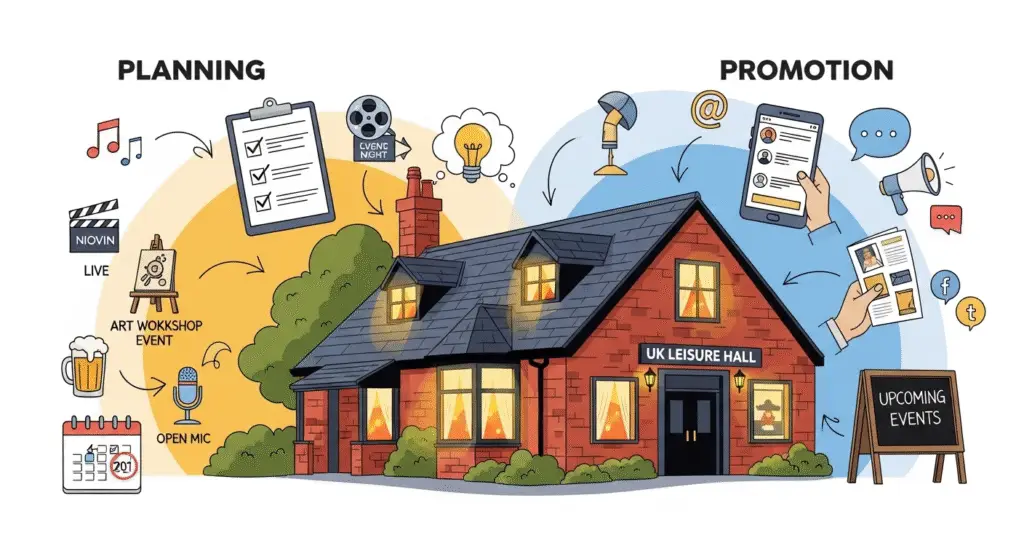
Running a small leisure venue on a high street means constantly finding ways to attract visitors and keep your space vibrant. From workshops and live music to themed nights and local markets, events can significantly boost your footfall, revenue, and community standing. But how do you plan and promote an event that truly stands out?
This guide breaks down the process into clear, manageable steps, ensuring your next event is a resounding success.
Step 1: Define Your Event Concept and Goals
Before you even think about dates, get crystal clear on what your event is and why you’re hosting it.
- What’s the Big Idea? Brainstorm concepts that align with your venue’s identity and appeal to your target audience. Are you a gaming café? A board game tournament or a ‘learn to play’ session could work. A community hall? Consider a local craft fair, a comedy night, or a children’s storytelling hour. Think about what makes your venue special and how an event can highlight that.
- Who is it For? Pinpoint your target audience. Families? Young professionals? Senior citizens? Knowing your audience helps you tailor the event’s content, timing, and promotion.
- What Do You Want to Achieve? Set clear, measurable goals. Do you want to:
- Increase Footfall? (e.g., attract 50 new visitors)
- Boost Revenue? (e.g., generate £500 in ticket sales or bar spend)
- Raise Your Profile? (e.g., get 10 social media mentions)
- Engage the Community? (e.g., host a charity fundraiser)
- Fill Off-Peak Hours? (e.g., a weekday afternoon workshop)
Having clear goals will guide every decision you make, from pricing to promotion.
Step 2: Plan the Nitty-Gritty Details
Once your concept is solid, it’s time to iron out the practicalities.
- Choose Your Date and Time Wisely: Consider holidays, local events that might compete, and your target audience’s availability. Weekends often work well for family events, while evenings might suit adult workshops or live performances.
- Set a Budget: This is crucial. List all potential costs: venue setup, staffing, performers/speakers, equipment hire, marketing materials, insurance, and any special permits. Then, estimate your potential income from tickets, food/drink sales, or vendor fees. Always have a contingency fund for unexpected expenses.
- Outline Your Program: Create a detailed schedule for the event. What will happen when? Who is responsible for each part? For a workshop, what’s the agenda? For a market, what’s the layout?
- Staffing Needs: Determine how many staff you’ll need and for what roles (e.g., ticket checkers, bar staff, event coordinators, security). Ensure they’re briefed and trained for their specific duties.
- Equipment and Supplies: List everything you’ll need: tables, chairs, sound system, lighting, projection screens, payment terminals, decorations, and any specific materials for activities.
- Permits and Licenses: This is vital for UK venues.
- Public Entertainment Licence: If your event involves live music, dancing, or theatre, you likely need this from your local council.
- Temporary Event Notice (TEN): For smaller, one-off events with specific activities (like selling alcohol outside your usual hours or late-night refreshment), a TEN might be more appropriate.
- PRS for Music & PPL: If you’re playing copyrighted music (live or recorded), ensure you have the necessary licences.
- Insurance: Double-check your public liability insurance covers events. You might need additional coverage for specific activities.
- Health and Safety: Conduct a risk assessment specific to the event. Identify potential hazards (e.g., crowded spaces, tripping hazards, equipment safety) and plan how to mitigate them. Ensure you have first aid provisions.
Step 3: Promote Your Event Like a Pro
Even the best event will flop if no one knows about it. Effective promotion is key.
- Start Early: Give yourself ample time – ideally 4-6 weeks for smaller events, more for larger ones.
- Online Promotion:
- Your Website: Create a dedicated event page with all the details: date, time, location, price, what to expect, and clear booking instructions.
- Social Media: This is your most powerful free tool.
- Create an event page on platforms like Facebook.
- Post regularly: teasers, behind-the-scenes glimpses, countdowns, and compelling visuals (photos, short videos).
- Use relevant hashtags (e.g., #YourTownEvents, #Whatsonin[YourTown], #LiveMusic[YourVenue]).
- Encourage shares and engagement.
- Consider targeted paid ads on Facebook/Instagram if your budget allows, focusing on your local area.
- Email Marketing: Send out a dedicated email to your existing customer list. Follow up with reminders as the event nears.
- Online Listings: List your event on local ‘what’s on’ websites like Our High Streets! (e.g., your local council’s event page, community notice boards like Eventbrite or local news sites).
- Offline Promotion: Don’t forget your local roots!
- In-Venue Promotion: Put up eye-catching posters, flyers, and table talkers in your venue. Train staff to talk about the event with customers.
- Local Partnerships: Collaborate with nearby businesses. Could a local cafe promote your workshop? Could a shop display your flyer?
- Local Media: Contact local newspapers, community radio stations, and online news blogs. Send them a well-written press release detailing your event.
- Flyers and Posters: Distribute them in high-traffic areas in your local area (with permission, of course!).
- Community Boards: Pin up notices in local community centres, libraries, and popular cafes.
Step 4: Run the Event and Engage Your Audience
The big day is here!
- Preparation: Do a final check of all equipment, setup, and staffing assignments. Ensure clear signage guides visitors.
- Welcome and Engage: Create a welcoming atmosphere. Have enthusiastic staff ready to greet guests, answer questions, and direct them.
- Capture the Moment: Take photos and videos (with permission, especially if children are involved!). These are invaluable for future promotion.
- Problem Solving: Be ready to calmly handle any unexpected issues – a technical glitch, a lost item, a customer query.
Step 5: Follow Up and Evaluate
The event isn’t over when the last guest leaves.
- Thank You: Send out thank-you emails to attendees, performers, and staff.
- Share Highlights: Post photos and videos from the event on your social media, website, and in your next newsletter. Thank everyone for coming!
- Gather Feedback: Send a short survey to attendees to get their thoughts. What did they like? What could be improved?
- Review Your Goals: Look back at the goals you set in Step 1. Did you achieve them? Why or why not?
- Analyse the Numbers:
- How many tickets were sold?
- What was the total revenue vs. total cost?
- How many new customers did you attract?
- What was the social media engagement like?
- Learn and Adapt: Use all this information to refine your approach for your next event. What worked well? What could be done differently?
By following these steps, you’ll be well on your way to planning and promoting successful events that not only boost your business but also establish your leisure venue as a vibrant, essential part of the UK high street community.